
A growing share of your customers no longer type “video agency Marbella” and scroll through ten blue links. They ask ChatGPT who’s good. Or they read the AI Overview at the top of Google and stop there. Either way, the answer names a handful of businesses, and everyone else is invisible.
There’s a whole industry of acronyms growing up around this: AEO, GEO, LLMO. Most of it makes the job sound more mysterious than it is. Here’s what Google and OpenAI actually say, and what we’ve seen work.
What Google says
Google’s own guidance for site owners is blunt. There are no extra requirements to appear in AI Overviews or AI Mode, and no special optimisation is needed. The SEO fundamentals still apply. (Google Search Central)
One detail is worth understanding. Google says both features can use a technique it calls “query fan-out”: it runs several related searches across subtopics, then builds the answer from the pages it finds. So a question like “who should I hire for property videos in Marbella?” gets broken into smaller ones. What does property video cost? Who has done it for local agents? What results did they get?
The businesses that get named are the ones with clear, specific pages answering those smaller questions.
Google’s list of best practices is short and practical: let Google crawl your site, link your pages together, keep important content in text rather than locked in images, back text up with good photos and video, keep your Business Profile current, and verify your site in Search Console. It also says you don’t need special AI files or special markup.
What OpenAI says
For ChatGPT search, OpenAI’s requirement is simpler still: allow its search crawler, OAI-SearchBot, to reach your site, and make sure your host or CDN isn’t blocking it. OpenAI is also clear that nobody can guarantee a top placement. (OpenAI Help Center)
That first point catches people out. Some website platforms, Squarespace included, have a setting that blocks AI crawlers. If it’s switched on, you may be invisible to the tools your customers are using. Check your site’s crawler settings and your robots.txt.
What we’ve seen: Strung
Strung is an app for racket stringers, built to replace the notepads and spreadsheets most of them run their business on. We planned the launch with the developers, then ran the socials and paid ads and made the tutorials and demos. 200 people downloaded it in the first 48 hours.
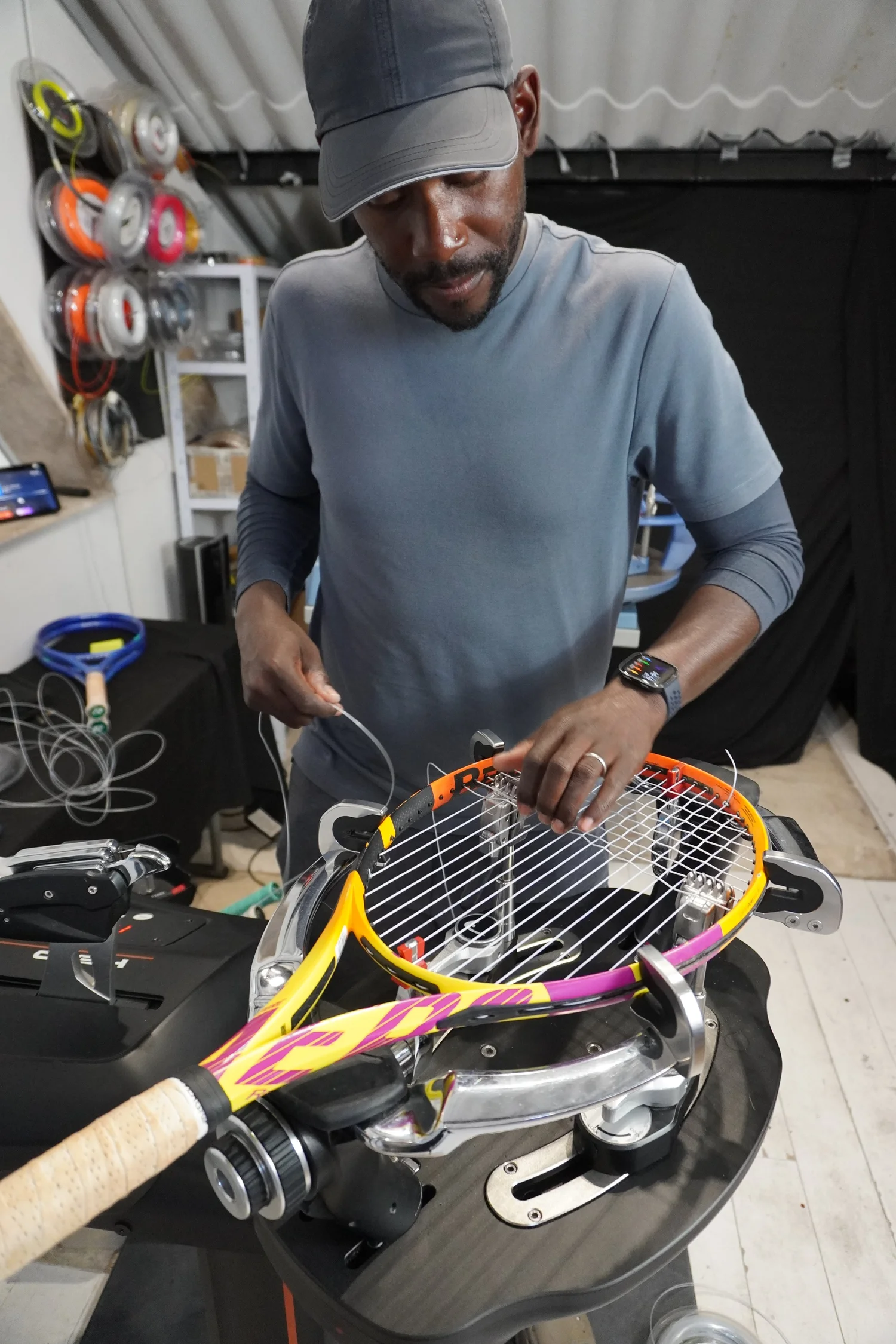
Today, ask ChatGPT for the best tennis stringing software and Strung is its top pick.
Prompt: “What is the best tennis stringing software to use?”
1. STRUNG — Best overall
My top pick
We can’t see inside ChatGPT, so we won’t pretend we can explain exactly why. But the pattern fits everything above. There is plenty of public material that says, in plain words, what Strung does and who it’s for. There are tutorials answering the exact questions stringers ask. And an active audience talks about it.
View this post on Instagram
A checklist for Costa del Sol businesses
- Say what you do and where, in plain words. “Property video and YouTube for estate agents in Marbella” is something an AI can repeat. “Elevating your brand story” is not.
- Give each service its own page. Answer the questions customers actually ask: what it is, who it’s for, how it works, what it costs or how pricing works.
- Publish proof. Case studies with real numbers give an AI something concrete to cite, and give a buyer a reason to call.
- Keep your Google Business Profile complete. Categories, services, photos and recent reviews.
- Earn genuine mentions. Reviews, local press, partners and directories that name you. Real ones only: bought reviews and fake listings are a risk, not a shortcut.
- Let the crawlers in. Check that Googlebot and OAI-SearchBot aren’t blocked.
- Test it monthly. Ask ChatGPT, Google and Perplexity the questions your customers ask. Note who gets named, and what those businesses have that you don’t.
What you can ignore
You don’t need a special “AI version” of your website, a pile of new files, or someone selling you a secret formula. The businesses that show up in AI answers are mostly the ones that were already easy to understand, easy to check and talked about by real people.
Want to know where you stand? We’ll ask the AI tools your customers use about your business and your competitors, and tell you what we’d fix first. Get in touch.
FAQ
Do I need to do anything special to appear in Google’s AI Overviews?
No. Google says there are no extra requirements or special optimisations for AI Overviews or AI Mode. Good SEO fundamentals are what count: a crawlable site, clear text content, good images and video, and an up-to-date Business Profile.
How does ChatGPT decide which businesses to recommend?
OpenAI doesn’t publish a formula and says top placement can’t be guaranteed. What it does require is that its search crawler, OAI-SearchBot, can reach your site. Beyond that, clear pages that answer real questions and genuine mentions elsewhere give it something to work with.
How can I check if AI tools recommend my business?
Ask them. Put the questions your customers ask into ChatGPT, Google and Perplexity once a month, and note which businesses get named. It’s free, and it shows you the gaps faster than any report.
